Email : info@anwell-hardware.com
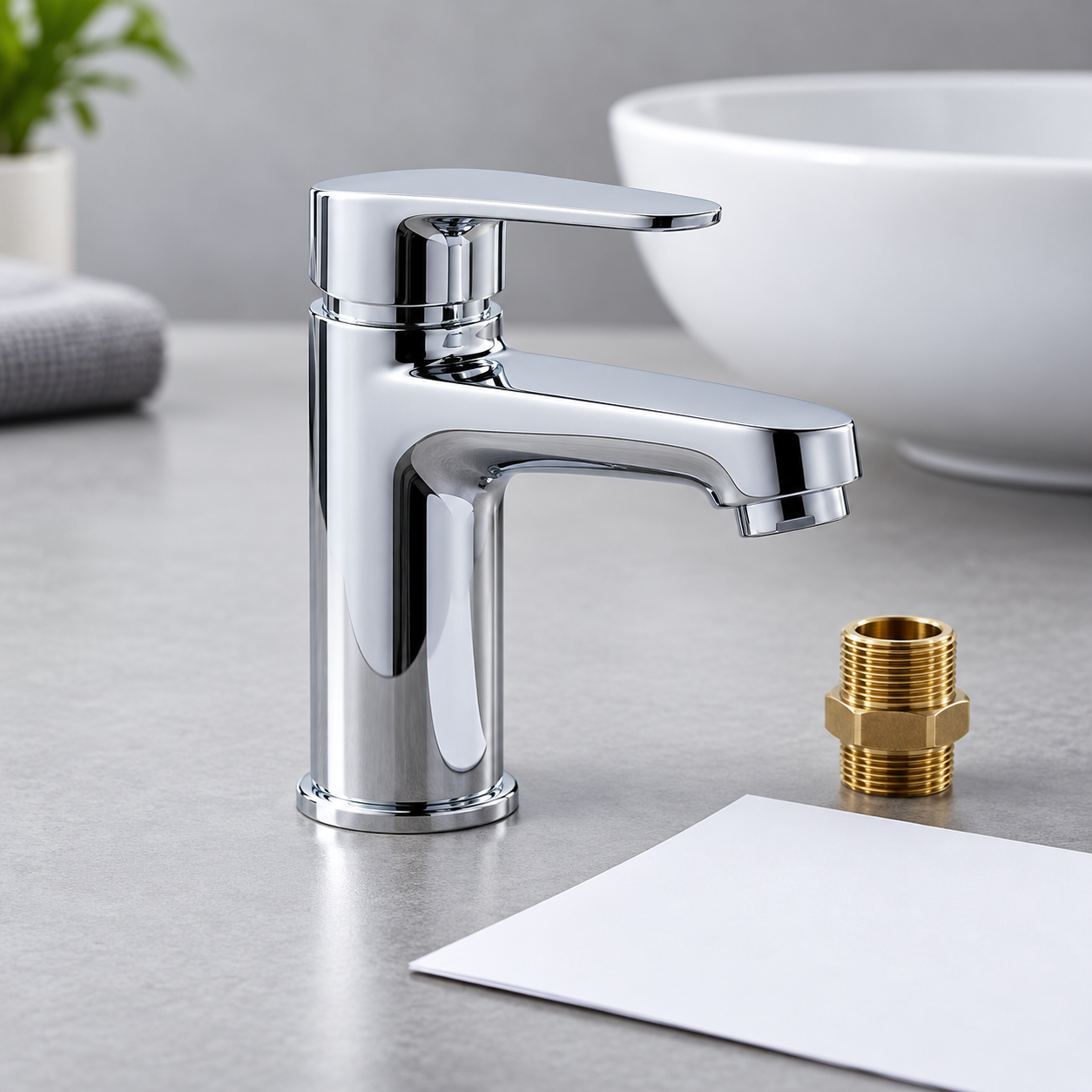

Verify faucet certification for importers pre-order: model listings, lead content, leaching standards, docs.
Faucet certification for importers starts with one question: does the approval cover the exact product being ordered? A catalogue logo or material claim can look reassuring, but it does not identify the certified model, applicable standard or permitted configuration. For distributors and project buyers, these details belong in the sourcing review before samples become bulk orders.
Drinking-water contact is a useful place to begin. A basin faucet contains more than its visible metal body: cartridges, seals, hoses and internal coatings may also touch water. Buyers need documentation that explains what was evaluated and how it relates to the finished assembly.
Separate Lead Content From Leaching Performance
Two commonly referenced standards answer different questions. NSF’s explanation of NSF/ANSI/CAN 372 states that the standard addresses lead content only. It provides a method for determining and verifying the amount of lead in covered drinking-water system components.
NSF/ANSI/CAN 61 instead evaluates substances that a component can introduce into drinking water under specified test conditions. NSF’s faucet and plumbing guidance discusses this material-safety evaluation, including lead and other potential impurities. A lead-content statement should therefore not be treated as evidence of every leaching requirement.
For covered plumbing fixtures in the United States, EPA defines “lead free” using a maximum weighted average lead content of 0.25% across wetted surfaces. This does not mean literally zero lead. The EPA overview of lead-free plumbing requirements also explains the certification requirements and exemptions. Confirm the applicable product category and destination requirements rather than extending this definition to every bathroom fitting or export market.
Check Faucet Certification for Importers at Model Level
Ask the supplier for the certification body, listing reference, covered model numbers and applicable standards. Then compare those identifiers with the quotation, approved sample and purchase order. Similar-looking faucets may use different water-contact components, so appearance alone does not establish that two models share an approval.
A practical review should record:
- The manufacturer or other certificate holder named in the listing.
- The exact model designation and any permitted model-family suffixes.
- The standards and product scope covered by the certification.
- Any listed limitations, configurations or conditions of use.
- The certification marks required on the product or packaging.
Use the certification body’s current directory when available. If the supplier provides only a certificate image, ask for a verifiable listing reference. An old test report may describe a tested sample without establishing ongoing certification of the product now offered.
Review Components and Private-Label Arrangements
Ask how the finished faucet’s water-contact parts relate to the certified configuration. A separately certified hose or cartridge can be useful supporting evidence, but its approval does not automatically certify the complete faucet. The relevant question is whether the assembled model and the parts supplied are covered by the required approval.
For private-label orders, clarify how the buyer’s brand and model number will appear in the certification records and on packaging. Do not assume that changing the box artwork creates permission to use a certification mark. Confirm the arrangement with the certification body or certificate holder before artwork approval.
The same discipline applies to substitutions. Agree that changes to water-contact materials or components will be reviewed for their effect on the approved configuration. Record the supplied component references so that future repeat orders can be compared with the original approval.
Keep Other Procurement Requirements Visible
Drinking-water material evaluation is one part of faucet qualification. Buyers still need to check any required mechanical performance, connection compatibility, flow requirements and market-specific approvals. A certificate with a narrow scope should be used for that scope.
For a hotel refurbishment, for example, the buyer might compare two basin mixers with the same finish and spout shape. One listing may cover the proposed model, while the other supplier provides a certificate for a different family. Requesting the correct documentation at this stage can prevent the wrong product from reaching the installation schedule. This is an illustrative procurement scenario.
Make Documentation Part of the Purchase Order
Attach the agreed model schedule and documentation requirements to the order. Specify which listing references, marking details and shipment identifiers must accompany delivery. At receiving inspection, compare model labels and packaging with the approved records, and resolve discrepancies before distribution or installation.
Repeat this check when a model, supplier or destination requirement changes. A consistent review helps purchasing teams distinguish a relevant approval from a generic claim and gives distributors a clearer record for customer enquiries.
Reliable faucet certification for importers depends on traceable models, clear approval scope and verified documentation. Share your destination market, product schedule and required approvals with Anwell Hardware when preparing a bathroom faucet sourcing enquiry.