Email : info@anwell-hardware.com

Water efficiency has become a practical purchasing consideration for residential developments, hotels, commercial buildings and bathroom retailers. However, reducing water consumption is only useful when the product still provides a comfortable and reliable user experience.
For buyers evaluating a modern shower head, the important question is therefore not simply “How low is the flow rate?” but “How well does the product perform at that flow rate?”
Flow Rate Is Only One Part of Performance
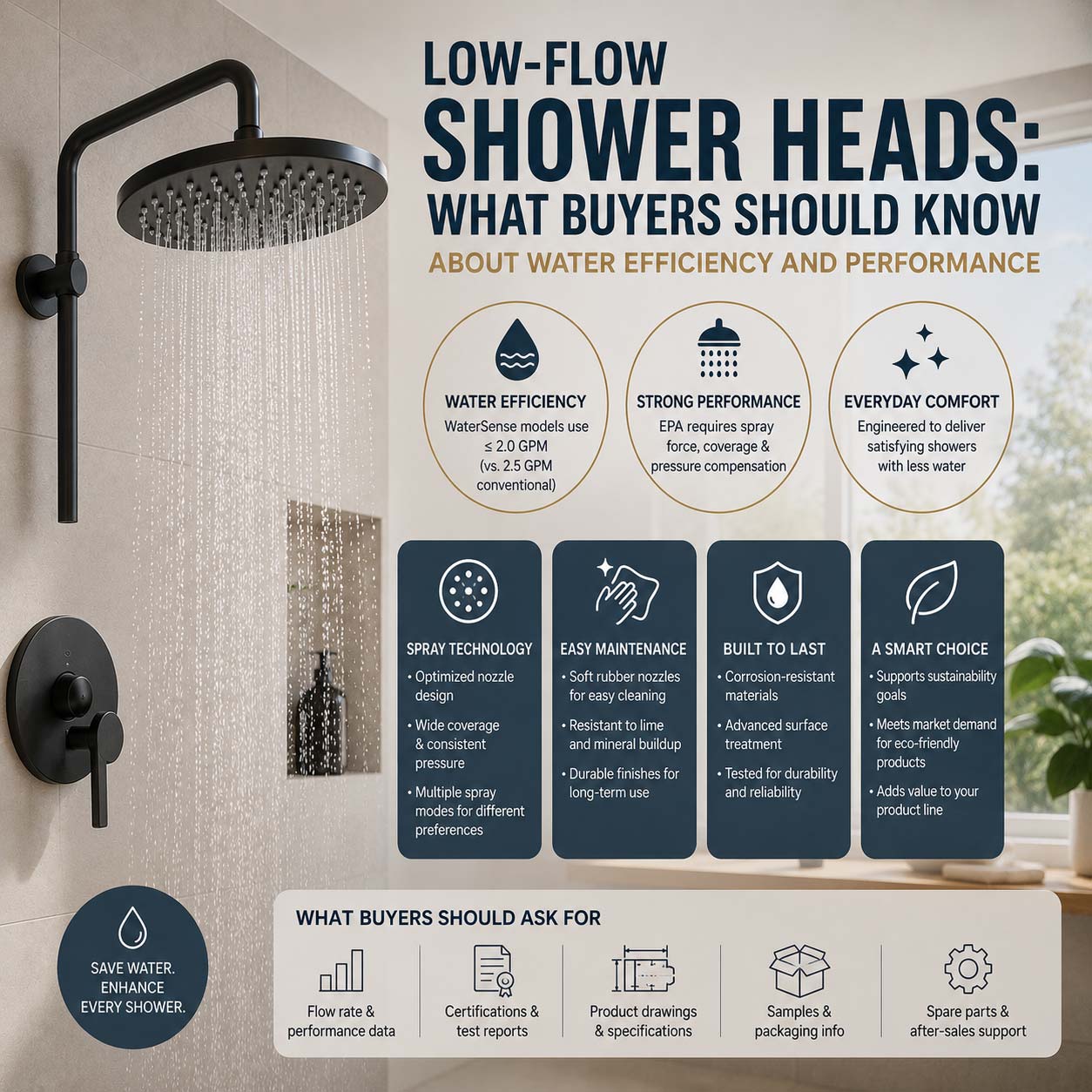
A conventional showerhead in the United States can use around 2.5 gallons of water per minute, while WaterSense-labeled models are limited to a maximum of 2.0 gallons per minute. EPA also requires certified products to demonstrate satisfactory spray force, spray coverage and pressure compensation.
This distinction matters when sourcing water-saving bathroom fixtures.
A product with a low nominal flow rate may still disappoint users if the spray pattern is too narrow or performance drops sharply when water pressure changes. For buyers serving different countries, pressure conditions should therefore be considered before selecting a product specification.
How Spray Technology Affects User Experience
Modern shower products use different nozzle arrangements and water-delivery designs to improve the perception of pressure while controlling water consumption.
The nozzle diameter, number of outlets, spray angle and internal flow path can all influence the final spray pattern. Multi-function models may also offer several settings, such as concentrated, rain or massage sprays.
For a product intended for an international market, engineers and purchasing teams should examine performance under different pressure conditions rather than relying only on laboratory flow data.
Easy Maintenance Matters
Mineral deposits can gradually block spray nozzles, particularly in areas with hard water. A practical shower head should therefore be designed with easy-to-clean spray outlets and materials that can withstand regular bathroom maintenance.
This is also relevant to bathroom hardware and shower controls. A visually attractive finish will have limited commercial value if it deteriorates quickly in a humid environment.
Buyers should ask suppliers about surface treatment, corrosion resistance, cleaning recommendations and product testing before placing larger orders.
Water Efficiency Is Becoming a Market Feature
Sustainability is increasingly visible in bathroom renovation decisions. Houzz’s 2025 U.S. research reported that 83% of homeowners included eco-friendly features in bathroom renovations, while 41% selected water-efficient fixtures.
This trend creates opportunities for retailers and brands to position water-saving faucets and shower products as practical upgrades rather than purely environmental products.
A coordinated product range can include a water-efficient faucet, efficient shower system, matching bathroom accessories and other sanitary fixtures. This allows customers to address water consumption without compromising the visual consistency of the bathroom.
A Better Approach to Product Sourcing
When comparing suppliers, buyers should request flow-rate data, applicable certifications, product drawings and samples where appropriate. Installation specifications and replacement components should also be considered.
For OEM and private-label projects, these details become even more important because the product needs to meet both technical requirements and the expectations of the target market.
Ultimately, successful water-saving bathroom products balance three factors: efficient water use, dependable performance and everyday comfort. That balance is what turns a technical specification into a commercially useful product.